



iNOS
iNOS is an inducible nitric oxide synthase that produces nitric oxide from L-arginine and acts as a key mediator of immune activation and inflammation[1]. Mechanistically, inflammatory cells such as macrophages produce nitric oxide mainly through iNOS during inflammatory processes, where nitric oxide functions as an innate immune effector molecule[2]. iNOS expression is regulated by inflammatory signaling pathways, including PKC, NF-κB, STAT3-NF-κB interaction, and PKCδ-IRF1 signaling, which connect cytokine or LPS stimulation to nitric oxide production[2][3][4]. In disease models, dysregulated iNOS has been linked to sepsis, cancer, neurodegeneration, pain, arthritis, inflammatory bowel disease, liver fibrosis, and neurological disease models[1][5][6][7]. Compared with nNOS and eNOS, iNOS differs by stimulus-responsive expression and high nitric oxide output, whereas nNOS mainly supports neuronal signaling and eNOS supports endothelial vascular regulation[8]. However, iNOS is not solely pathological, because traumatic brain injury models showed worse outcomes after iNOS inhibition or iNOS gene deletion[9]. For experimental applications, selective iNOS inhibitors remain useful tools for testing nitric oxide-dependent mechanisms, although no iNOS inhibitor is approved for human use[1].
References:
- [1]. Cinelli MA, et al. Inducible nitric oxide synthase: Regulation, structure, and inhibition. Med Res Rev. 2020 Jan;40(1):158-189. [Content Brief]
- [2]. Leppänen T, et al. Protein kinase C and its inhibitors in the regulation of inflammation: inducible nitric oxide synthase as an example. Basic Clin Pharmacol Toxicol. 2014 Jan;114(1):37-43. [Content Brief]
- [3]. Yu Z, et al. Signal transducers and activators of transcription 3 (STAT3) inhibits transcription of the inducible nitric oxide synthase gene by interacting with nuclear factor kappaB. Biochem J. 2002 Oct 1;367(Pt 1):97-105. [Content Brief]
- [4]. Leppänen T, et al. Down-regulation of protein kinase Cδ inhibits inducible nitric oxide synthase expression through IRF1. PLoS One. 2013;8(1):e52741. [Content Brief]
- [5]. Kolios G, et al. Nitric oxide in inflammatory bowel disease: a universal messenger in an unsolved puzzle. Immunology. 2004 Dec;113(4):427-37. [Content Brief]
- [6]. Cinar R, et al. Hybrid inhibitor of peripheral cannabinoid-1 receptors and inducible nitric oxide synthase mitigates liver fibrosis. JCI Insight. 2016;1(11):e87336. [Content Brief]
- [7]. Gage MC, et al. Inhibitors of Src Family Kinases, Inducible Nitric Oxide Synthase, and NADPH Oxidase as Potential CNS Drug Targets for Neurological Diseases. CNS Drugs. 2021 Jan;35(1):1-20. [Content Brief]
- [8]. Förstermann U, et al. Nitric oxide synthases: regulation and function. Eur Heart J. 2012 Apr;33(7):829-37, 837a-837d. [Content Brief]
- [9]. Sinz EH, et al. Inducible nitric oxide synthase is an endogenous neuroprotectant after traumatic brain injury in rats and mice. J Clin Invest. 1999 Sep;104(5):647-56. [Content Brief]
-
iNOS Related Products (206)
Related Products (206)

-
COX-2/NO-IN-1
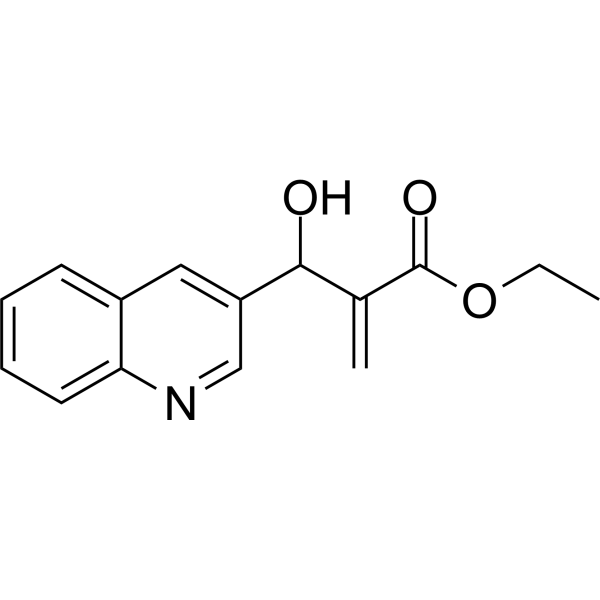 0 ImagesCat. No.: HY-146161CAS No.: 2989882-91-7

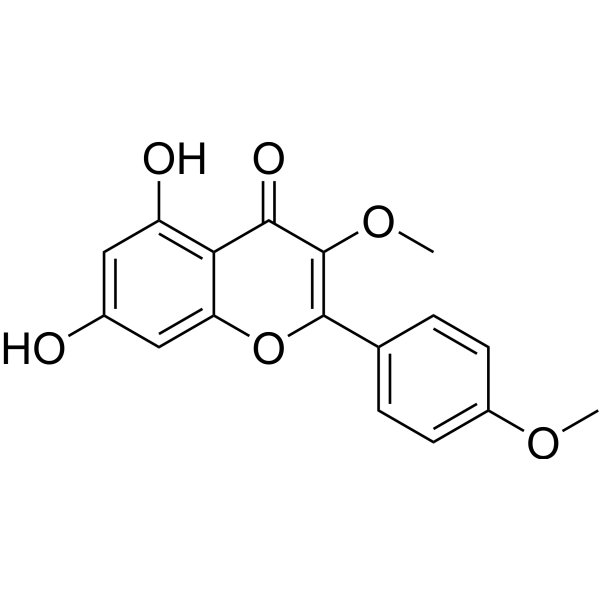
-
Leupeptin Ac-LL
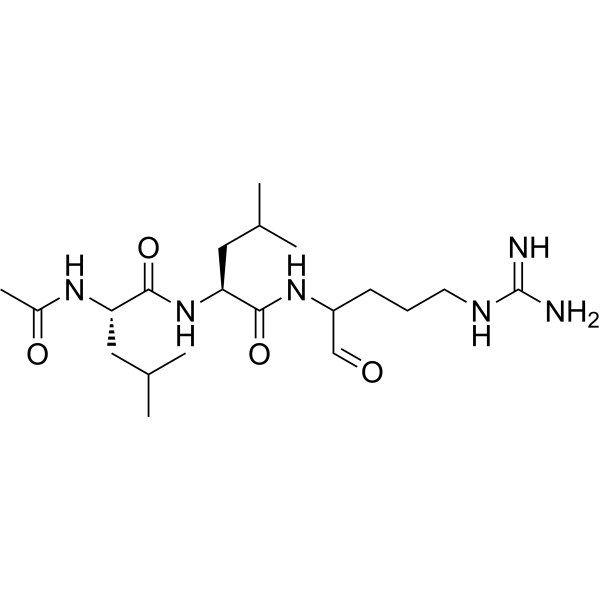 0 ImagesCat. No.: HY-18234BCAS No.: 24365-47-7Leupeptin Ac-LL is a broad-spectrum protease inhibitor. By inhibiting the activation of the PTEN/PI3K/Akt/NF-κB/ERK1/2/p38 signaling pathway, Leupeptin Ac-LL significantly reduces LPS-induced NO and ROS production, mitochondrial membrane potential hyperpolarization, phagocytic activity, pro-inflammatory cytokine release, and M1 polarization in mouse peritoneal macrophages, and reverses autophagic flux impairment. It also decreases Concanavalin A (HY-P2149)-induced proliferation index of mouse splenic lymphocytes and the Th1/IL-10 and Th2/IL-10 cytokine ratios, thereby modulating innate and adaptive immune responses. Leupeptin Ac-LL inhibits blood coagulation and tumorigenesis in mouse skin. Leupeptin Ac-LL can be used in research on chronic inflammatory diseases and skin tumorigenesis.
-
Lucidone
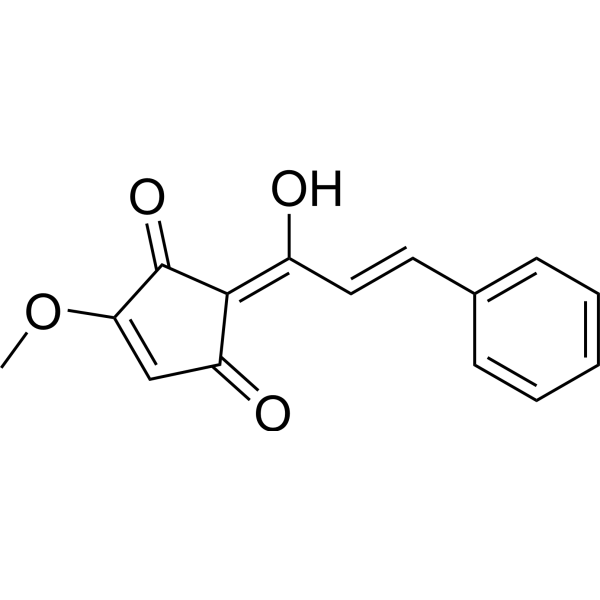 0 ImagesLucidone, an anti-inflammatory agent that can be isolated from the fruit of Lindera erythrocarpa Makino. Lucidone inhibits LPS-induced NO and PGE2 production in RAW 264.7 mouse macrophages. Lucidone also decreases TNF-α secretion, iNOS and COX-2 expression. Lucidone prevents NF-κB translocation and inhibits JNK and p38MAPK signals. Lucidone also has inhibitory activity against Dengue virus (DENV) (EC50=25 μM).

-
Cacospongionolide B
 0 ImagesCat. No.: HY-N21818CAS No.: 172854-76-1Cacospongionolide B is an orally active sesterterpene compound that can be isolated from Fasciospongia cavernosa. Cacospongionolide B is a secreted phospholipase A2 (sPLA2) inhibitor with an IC50 of 4.3 μM. Cacospongionolide B exhibits antibacterial activity. Cacospongionolide B downregulates the expression of iNOS, COX-2 and TNF-α by inhibiting NF-κB nuclear translocation and its DNA binding, and simultaneously selectively and irreversibly inhibits sPLA2 enzymatic activity. Cacospongionolide B can be used in studies related to bacterial infection and adjuvant arthritis.
-
Hordenine hydrochloride (Standard)
 0 ImagesSynonyms: Ordenina hydrochloride (Standard); Peyocactine hydrochloride (Standard)Hordenine hydrochloride (Standard) (Ordenina hydrochloride (Standard); Peyocactine hydrochloride (Standard)) is the analytical standard of Hordenine hydrochloride (HY-N0113B). This product is intended for research and analytical applications. Hordenine hydrochloride (Ordenina hydrochloride; Peyocactine hydrochloride) is a multifunctional alkaloid with oral activity and blood-brain barrier penetration. Hordenine hydrochloride inhibits LPS-induced phosphorylation of p38, JNK, ERK1/2, p65, IκB, and AKT, prevents p65 nuclear translocation, and suppresses inflammatory cytokines and mediators. Hordenine hydrochloride inhibits melanin synthesis in melanocytes and reconstructed epidermis. Hordenine hydrochloride activates the Wnt/β-catenin signaling pathway. Hordenine hydrochloride activates DRD2, acts as a D3R partial agonist, α2A-AR full agonist, and 5-HT2A-R antagonist, and inhibits SERT and DAT. Hordenine hydrochloride inhibits α-synuclein accumulation and ameliorates motor deficits in Parkinson's disease models. Hordenine hydrochloride limits alcohol intake, reduces relapse drinking behavior. Hordenine hydrochloride can be used for research on mastitis, skin pigmentation, acute lung injury, foodborne diseases, hair loss, Parkinson's disease, bacterial infections, and alcohol use disorder.
-
Orazipone
 0 ImagesCat. No.: HY-106981CAS No.: 137109-78-5Synonyms: OR 1384Orazipone (OR 1384) is a small molecule immunomodulator with strong anti-inflammatory properties. Orazipone exerts its immunomodulatory effect by forming reversible thiol complexes, which bind to intracellular signaling proteins and the thiol groups of glutathione. Orazipone exhibits potent anti-eosinophilic activity by inducing apoptosis. Orazipone inhibits activation of inflammatory transcription factors NF-kB and STAT 1 and decreases inducible iNOS expression and NO production in response to inflammatory stimuli. Orazipone reduces NADPH oxidase activity and thereby decreases ROS production. Orazipone has a protective effect in intestinal radiation injury.
-
iNOS/TopoI-IN-1
 0 ImagesCat. No.: HY-162805iNOS/TopoI-IN-1 (compound AuL9) is a multi-target hybrid molecule with anti-tumor, anti-inflammatory and antioxidant activities. iNOS/TopoI-IN-1 inhibits the growth of breast cancer cells MCF-7 and MDA MB-231 in vitro with IC50 of 3.5 μM and 6.3 μM, respectively, and induces DNA damage and apoptosis of breast cancer cells by inhibiting human topoisomerase I (TopoI) (Ki=2.72 μM). In addition, NOS/TopoI-IN-1 inhibits the expression of iNOS by inhibiting the activation of NF-kB (Ki=1.49 μM).
-
NDs-IN-1
 0 ImagesCat. No.: HY-158334CAS No.: 3033806-97-9(Neurodegenerative diseases) NDs-IN-1 (Compound 3g) inhibits the activities of key enzymes such as hBACE-1, hAChE and hMAO-B. NDs-IN-1 is a novel non-covalent multi-target inhibitor. NDs-IN-1 is mainly used in the study of neurodegenerative diseases.
-
iNOs-IN-7
 0 ImagesCat. No.: HY-122584CAS No.: 268730-08-1iNOs-IN-7 (example 4) is an inducible nitric oxide synthase (NOS) inhibitor. iNOs-IN-7 can be used for the study of inflammatory disease and pain.
-
1,3,5-Trihydroxy-4-prenylxanthone
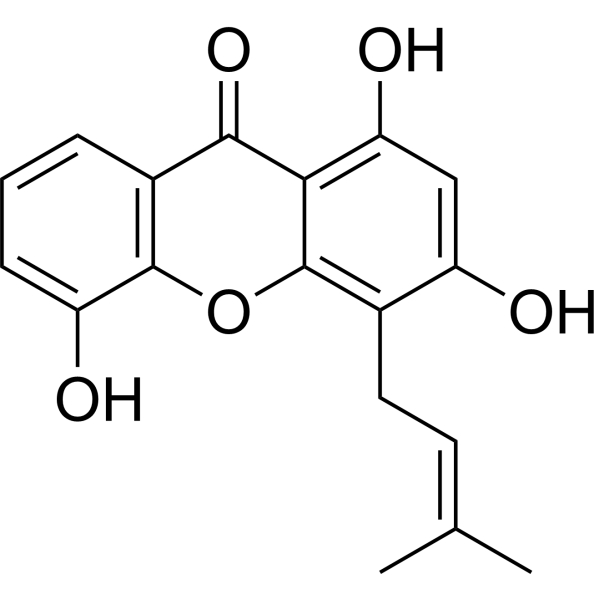 0 ImagesCat. No.: HY-N10156CAS No.: 53377-61-01,3,5-Trihydroxy-4-prenylxanthone is a Na+/H+ exchange system inhibitor with a minimum inhibitory concentration of 10 μg/mL. 1,3,5-Trihydroxy-4-prenylxanthone is a phosphodiesterase type 5 (PDE5) inhibitor with an IC50 value of 3.0 μM. 1,3,5-Trihydroxy-4-prenylxanthone inhibits Lipopolysaccharide (LPS) (HY-D1056)-induced NO production in RAW264.7 macrophages, and has anti-inflammatory activities.
-
CR-3294
 0 ImagesCat. No.: HY-16151CAS No.: 457939-22-9CR-3294 is an autophagy inducer in hypoxic cells. CR-3294 is an inducible enzyme nitric oxide synthase (iNOS) inhibitor. CR-3294 inhibits both the DNA binding of HIF-1alpha and VEGF mRNA synthesis. CR-3294 can be used for the study of breast cancer and inflammatory bowel disease (IBD), such as Crohn’s disease, ulcerative colitis.
-
Hirundigoside E
 0 ImagesCat. No.: HY-N18187CAS No.: 2192292-95-6Hirundigoside E is a compound with anti-inflammatory activity. Hirundigoside E inhibits LPS (HY-D1056)-induced iNOS protein expression in macrophages. Hirundigoside E can be used for the research of inflammatory diseases.
-
Antitumor agent-225
 0 ImagesCat. No.: HY-187003CAS No.: 1338320-95-8Antitumor agent-225 is an orally effective and potent HDAC inhibitor with an IC50 value of 4.17 nM. Antitumor agent-225 inhibits HDAC activity by chelating zinc ions through its hydroxamic acid group, downregulates iNOS and COX-2 proteins, and suppresses the production of multiple inflammatory factors induced by LPS (HY-D1056). Antitumor agent-225 can be used for research on cancer and inflammation-related diseases.
-
PSB 0474
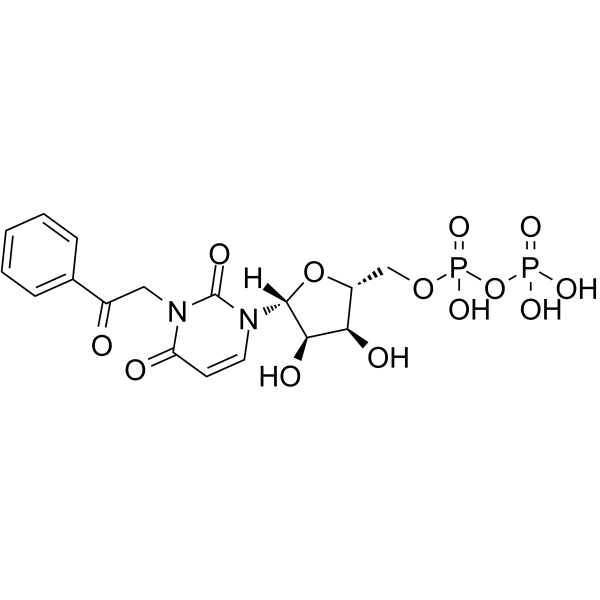 0 ImagesCat. No.: HY-108654CAS No.: 917567-60-3PSB 0474 (3-phenacyl-UDP) is a UDP (HY-113359) analog and selective P2Y6 receptor agonist, with an EC50 value of 70 nM for the hP2Y6 receptor. PSB 0474 activates Phospholipase C-coupled receptors to increase intracellular inositol phosphate levels. PSB 0474 enhances NO release by upregulating inducible iNOS and induces Apoptosis. PSB 0474 increases micturition frequency in urine of anesthetized rats, without altering bladder contraction amplitude/duration or causing urothelial damage. PSB 0474 can be used in studies related to chronic brain inflammation.
-
Hordenine sulfate
 0 ImagesCat. No.: HY-N0113ACAS No.: 62493-39-4Synonyms: Ordenina sulfate; Peyocactine sulfateHordenine sulfate (Ordenina sulfate; Peyocactine sulfate) is a multifunctional alkaloid with oral activity and blood-brain barrier penetration. Hordenine sulfate inhibits LPS-induced phosphorylation of p38, JNK, ERK1/2, p65, IκB, and AKT, prevents p65 nuclear translocation, and suppresses inflammatory cytokines and mediators. Hordenine sulfate promotes M2 macrophage polarization, restores blood-milk barrier integrity, alleviates oxidative stress by reducing ROS and MDA, and attenuates LPS-induced lung injury and pulmonary edema. Hordenine sulfate inhibits cAMP production, CREB phosphorylation, and MITF expression, thereby suppressing melanin synthesis in melanocytes and reconstructed epidermis. Hordenine sulfate activates the Wnt/β-catenin signaling pathway, promotes dermal papilla cell proliferation and hair shaft elongation, and accelerates hair regeneration. Hordenine sulfate activates DRD2, acts as a D3R partial agonist, α2A-AR full agonist, and 5-HT2A-R antagonist, and inhibits SERT and DAT. Hordenine sulfate inhibits α-synuclein accumulation and ameliorates motor deficits in Parkinson's disease models. Hordenine sulfate limits alcohol intake, reduces relapse drinking behavior, and modulates alcohol-induced conditioned place preference. Hordenine sulfate can be used for research on mastitis, skin pigmentation, acute lung injury, foodborne diseases, hair loss, Parkinson's disease, bacterial infections, and alcohol use disorder.
-
S-Petasin
 0 ImagesCat. No.: HY-N17617CAS No.: 70238-51-6S-Petasin is a phosphodiesterase (PDE) inhibitor with IC50 values of 25.5 μM and 17.5 μM for PDE3 and PDE4, respectively. S-Petasin inhibits cholesterol side-chain cleavage enzyme, 11β-hydroxylase, PPAR-γ, and iNOS induction at RNA and protein levels. S-Petasin induces apoptosis, activates caspases, cleaves PARP, modulates mitochondrial membrane permeability, and regulates BCL2/BAX, p53, Bcl-XL, MMP-2, MMP-9, p21, CDK4, and cyclin D1 expression. S-Petasin reduces inflammatory cell accumulation, cytokine and IgE levels, and enhances serum IgG2a levels. S-Petasin relaxes isolated sensitized guinea pig trachealis and exhibits gastrointestinal anti-spasmodic activity. S-Petasin reduces tonsillitis severity and asthmatic attack frequency. S-Petasin can be used for the research of prostate cancer, obesity, melanoma, allergic asthma, asthma, and peritonitis.
-
Fyn-IN-1
 0 ImagesCat. No.: HY-180938CAS No.: 3107638-80-9



